






Testosterone is often regarded as the ultimate sign of male vitality, impacting muscular strength, bone density, sexual desire, and mood. But what happens if this essential hormone begins to decline? Millions of men or Assigned Males at Birth (AMABs) throughout the world experience Low Testosterone at some point in their lives, sometimes without recognizing it.
Fatigue, reduced sex drive, weight gain, and even Depression may quietly point to a hormonal imbalance in males. So, what causes Low Testosterone in men? The answer is more complex than just becoming older. Factors range from genetic conditions and chronic illnesses to poor lifestyle habits, medication side effects, and even environmental influences.
Understanding these factors is the first step toward diagnosis, treatment, and resuming a better, more vibrant lifestyle. If left untreated, Low Testosterone (Low T) can significantly impact a man’s physical and mental health, making awareness crucial for prevention and management.
This article will highlight all the potential causes of Low T in men and ways to restore the hormonal balance.
What causes Low Testosterone in men?
Low Testosterone, often known as Male Hypogonadism, can be broadly classified into two main types:
- Primary Hypogonadism (Testicular Disorder): This occurs when the testicles fail to produce enough Testosterone despite getting enough signals from the brain.
- Secondary Hypogonadism (pituitary/hypothalamic dysfunction): In this kind, the testicles are healthy, but the problem is in the brain, notably the hypothalamus or pituitary gland, which fails to deliver the essential signals to the testicles to generate Testosterone.
Many causes can lead to Low Testosterone levels, including aging, lifestyle choices, and underlying medical concerns.
Let’s look at these factors leading to Hypogonadism in men in detail.
Save up to 90% on your medicine bills

Cernos Gel 1%w/w
Starting at just $3.03 per sachetBuy Now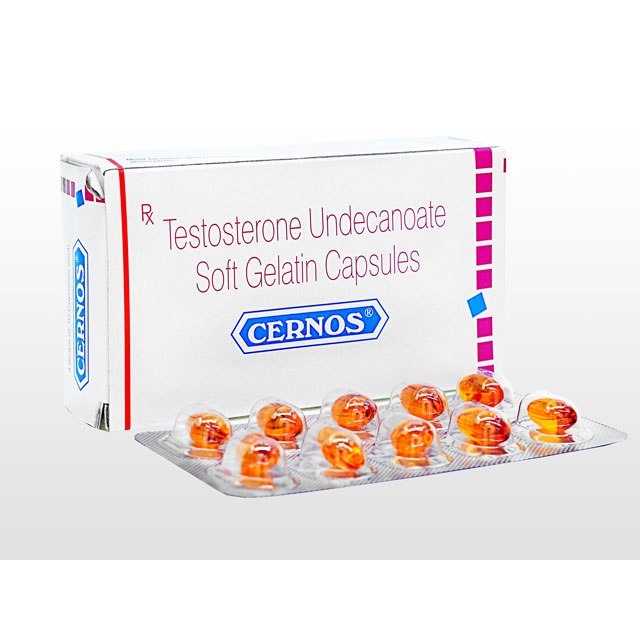
Cernos 40 Mg Soft Gelatin Capsule
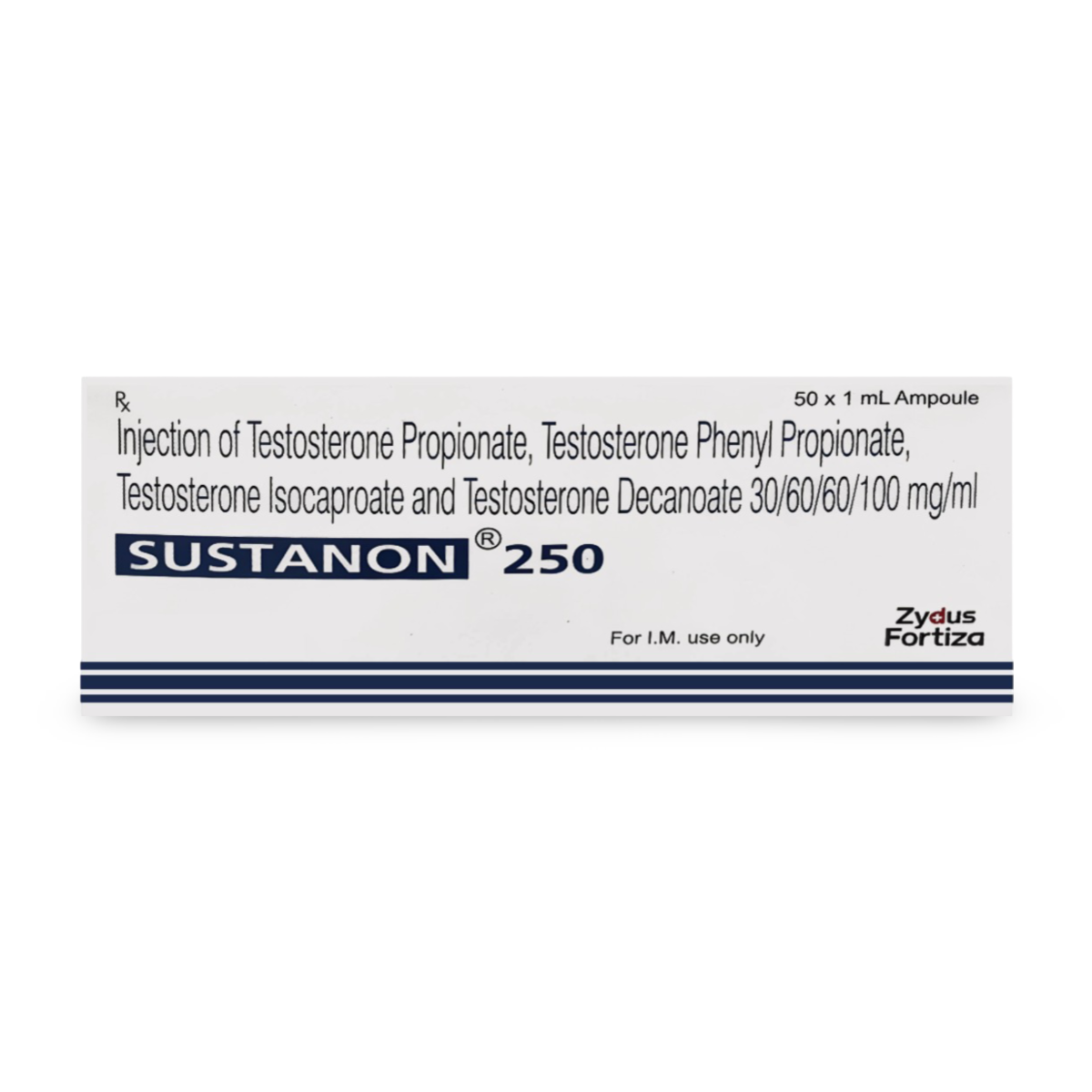
Sustanon 250 Injection
Starting at just $12.84 per injectionBuy Now
Carmel Organics Ashwagandha Extract Tablets
Aging
As men age, their Testosterone levels naturally fall. This process typically begins about the age of 30 and progresses steadily, with levels declining by roughly 1% every year. This age-related decline is referred to as Late-onset Hypogonadism.
It occurs due to decreased testicular activity and hindered signaling from the hypothalamus and pituitary gland, brain regions involved in hormone control. While aging is not a disease, its effects on Testosterone can cause symptoms such as low libido, fatigue, and mood swings.
Obesity
Excess body fat, particularly the fat found around the belly, is a major factor causing hormonal imbalance in males. Aromatase, an enzyme found in fat tissue, transforms Testosterone into Estrogen.
Higher amounts of Estrogen instruct the brain to limit Testosterone synthesis. Obesity also causes inflammation and insulin resistance, which further reduces Testosterone production.
Chronic illnesses
Type 2 Diabetes, Hypertension (High Blood Pressure), metabolic syndrome, kidney problems, and Liver Cirrhosis are all closely linked to Low Testosterone levels. These illnesses affect the Hypothalamic-pituitary-gonadal (HPG) axis, a hormonal regulating system interfering with the hormonal signals necessary for Testosterone synthesis.
Additionally, chronic illness-induced inflammation raises Cytokine levels, decreasing the testes’ capacity to produce Testosterone.
Mental health issues
Long-term stress increases Cortisol, the body’s main stress hormone. Cortisol disturbs hormonal balance and impairs the brain’s capacity to activate the testes, thus decreasing Testosterone synthesis.
Depression and Anxiety are also strongly connected to Low Testosterone since they frequently induce or result from poor sleep, low motivation, and harmful lifestyle practices, all of which can worsen hormonal problems.
Medications
Several commonly recommended medications can lower Testosterone levels. Opioids (painkillers such as Morphine), corticosteroids (such as Prednisone), chemotherapy medicines, antidepressants, and anti-androgens (used in prostate problems) have all been shown to reduce Testosterone by interfering with its synthesis or disrupting hormonal communication pathways.
Long-term usage of these medicines can cause Clinical Hypogonadism.
Testicular injury or disease
Any injury, trauma, or surgical damage to the testicles may decrease their capacity to produce Testosterone. Testicular torsion, Orchitis (inflammation), and radiation therapy can all cause long-term malfunction of the Leydig cells in the testes, responsible for Testosterone synthesis.
Even childhood disorders, such as undescended testicles (Cryptorchidism), can have long-term effects on hormone levels.
Hormonal and genetic disorders
Hormonal conditions affecting the hypothalamus or pituitary gland, such as pituitary tumors, Hypopituitarism (a condition where the pituitary gland fails to produce hormones), or Kallmann syndrome, can reduce the production of Luteinizing Hormone (LH) and Follicle-stimulating Hormone (FSH), all of which are required for Testosterone production.
Genetic disorders such as Klinefelter syndrome (in which boys have an extra X chromosome) cause underdeveloped testes and persistent Testosterone insufficiency.
Alcohol and substance abuse
Excessive alcohol use can compromise testicular function and damage the liver, which regulates hormone metabolism. Alcohol reduces Testosterone levels by raising Estrogen and interacting with the HPG axis.
Similarly, substance abuse, particularly anabolic steroids, marijuana, and opioids, can significantly disturb hormonal balance, resulting in both short- and long-term Testosterone reduction.
Infections
Certain infections, particularly those that target the testes directly, can cause inflammation and damage, reducing Testosterone production. Mumps Orchitis, a consequence of mumps infection, is well-known for causing irreversible testicular injury.
Other chronic infections may indirectly lower Testosterone by influencing the immunological or endocrine systems.
Sleep disorders
Testosterone is mainly produced during deep sleep, particularly in the early morning. Sleep Apnea, Insomnia, and irregular sleep patterns all disturb this cycle, resulting in drastically lowered hormone levels.
Obstructive Sleep Apnea (OSA), in particular, is closely associated with Low Testosterone.
Treating Low T in men
Treatment for Low Testosterone consists of lifestyle adjustments, medical treatment, and, in certain circumstances, hormone therapy. The first approach is to identify and treat any underlying reasons, such as Obesity, chronic disease, stress, or adverse effects of medication.
Lifestyle changes, such as frequent physical exercise, better sleep, weight loss, and a well-balanced diet rich in zinc, Vitamin D, and healthy fats, can naturally boost Testosterone production. In more severe or chronic instances, doctors may offer Testosterone Replacement Therapy (TRT), which can be provided as injections, gels, patches, or pellets.
However, patients undergoing TRT need close monitoring because it might cause adverse effects such as increased Red Blood Cell (RBC) count, acne, infertility, and cardiovascular problems. Managing Low Testosterone in men successfully often requires a personalized plan that balances symptom relief with long-term health goals.
Conclusion
What causes Low Testosterone in men? Although a gradual decline in Testosterone with age is normal, several factors, including Obesity, chronic disease, hormone problems, stress, sleep troubles, and lifestyle choices such as alcohol or substance abuse, cause Low Testosterone in males.
Early detection of symptoms such as reduced libido, fatigue, and mood changes is essential for accurate diagnosis and treatment. Fortunately, multiple causes of Low Testosterone can be managed effectively with lifestyle changes, medical treatment, or hormone therapy when necessary.
Seeking expert medical guidance and leading a healthy lifestyle are vital steps toward regaining hormonal balance and boosting overall health.

Frequently Asked Questions
Does dehydration affect Testosterone levels?
Yes, persistent dehydration can damage cell function and hormone signaling. While it does not directly cause Low Testosterone levels, it can limit performance and stress the body, potentially affecting hormone balance over time.
Does frequent ejaculation diminish Testosterone levels?
No, frequent ejaculation has no significant effect on baseline Testosterone levels. While levels may temporarily drop following an orgasm, they rapidly rebound to normal and do not contribute to long-term Testosterone depletion.
Can zinc deficiency result in Low Testosterone?
Yes. Zinc is an essential mineral that promotes enzyme activity during Testosterone production. A zinc deficit decreases Luteinizing Hormone (LH) secretion and inhibits Leydig cell activity, reducing Testosterone levels and possibly causing Male Hypogonadism.
Can gut health affect Testosterone levels?
Yes, gut health and Testosterone levels are often connected. Poor gut health can boost inflammation and Cortisol levels, which decrease Testosterone. Healthy gut microbes assist in controlling hormone metabolism; therefore, digestive health is essential for hormonal balance.
Is low cholesterol associated with Low Testosterone?
Yes, low cholesterol and Low Testosterone are associated to each other. Cholesterol is a building block of Testosterone. Excessive statin usage or severe diets might result in very low cholesterol, lowering Testosterone levels.
Cheap Medicine Shop only refers to credible, authoritative sources for our content. If you're curious about how we ensure the integrity of our content, we encourage you to read our Content Information Policy.