





Menstruation and pregnancy are important features of women’s or Assigned Females at Birth (AFAB) reproductive health.
While menstruation and pregnancy are distinct experiences, the early stages of both can share some surprising similarities. Both involve intense hormonal fluctuations leading to emotional and physical changes in the body.
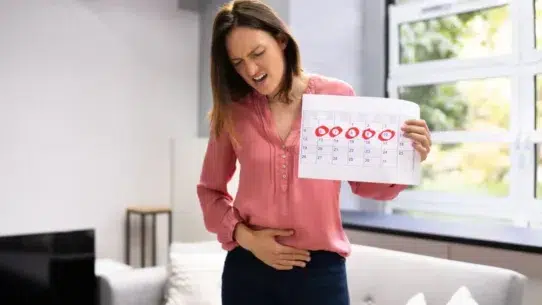
Cramping, mood swings, and fatigue, among others, are some of the symptoms experienced both during periods and pregnancy.
However, there are certain symptoms that don’t overlap and are distinct to both pregnancy and periods.
Let us proceed with this article and gain clarity on period symptoms vs pregnancy symptoms.
Symptoms Common to Both
During your menstrual cycle or periods, a drop in your Progesterone levels leads to the shedding of the blood lining in the uterus and causes related period symptoms like mood swings and cramps.
Whereas during pregnancy, there is an increase in Progesterone to support the development of the fetus.
Although both these biological processes differ from each other, the hormonal fluctuations in these processes give rise to symptoms that overlap and can create confusion.
Knowing the symptoms of both can help in differentiating.
Cramping
Period cramps are a result of Prostaglandins, which cause uterine contractions and make the lining in the uterus shed, thus leading to cramps. Period cramps can vary from mild to severe and feel like an ache or throbbing pain.
Whereas cramps during pregnancy – implantation cramps. These are usually mild and occur early in pregnancy. They feel like a twinging or pulling sensation.
Bleeding
Menstrual flow is caused by the shedding of the uterine lining if the egg is not fertilized. It usually lasts for 3-7 days and is heavier in flow.
However, during pregnancy, light bleeding or only spotting is experienced at the time of implantation.
Breast Changes
Period symptoms can occur in the days leading up to your cycle, known as Premenstrual Syndrome (PMS). In the days before your period, Progesterone levels are high in the body, which leads to tenderness and swelling in the breasts. This usually eases once you start bleeding.
Pregnant women, or AFABs, also experience changes in their breasts during pregnancy.
This is because Prolactin prepares the breasts for milk production during pregnancy, which causes the breasts to become enlarged and heavy. This lasts for several weeks.
Fatigue

Constant mood swings and the fall in Estrogen levels during periods can lead to feelings of fatigue. This is temporary and goes away as soon as your period starts.
The increase in the level of Progesterone during your pregnancy and changes in the body to facilitate the development of the baby lead to fatigue or tiredness among women. This is generally persistent and doesn’t go away with rest.
Mood Swings
During periods, the reduction in Estrogen also reduces the level of feel-good hormones or Serotonin in the brain, leading to sudden mood swings and feelings of sadness. These mood swings are mostly short-lived.
During pregnancy, women’s bodies undergo a lot of physical changes. These changes, along with fluctuations in the levels of Estrogen and Progesterone, lead to mood swings that last throughout the pregnancy. Women are usually emotional during this phase.
Nausea
While not very common, women might feel a bit nauseous during periods. Prostaglandins, released during your periods, can irritate your digestive system, leading to nausea and feelings of indigestion.
During pregnancy, women experience morning sickness that lasts several weeks. Aversions to certain food items can make this even worse.
Save up to 90% on your medicine bills

Naprosyn 500 mg

Brufen 400 mg
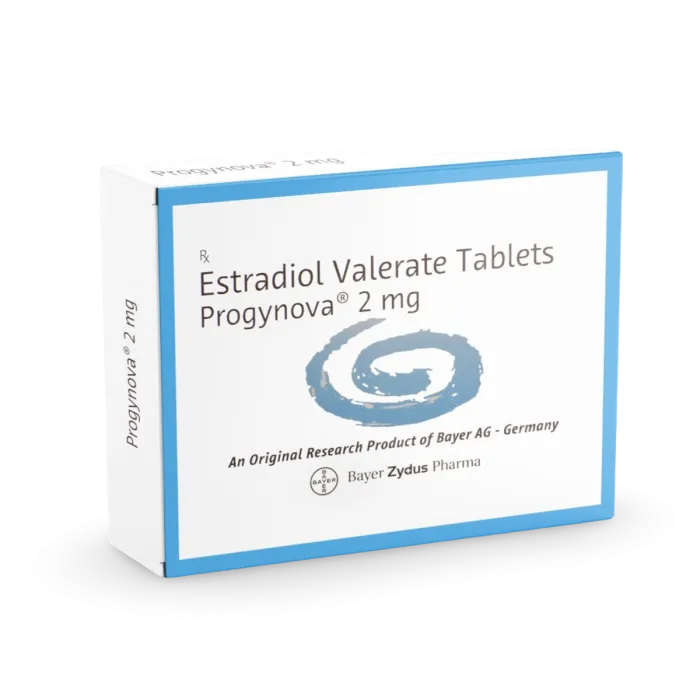
Progynova 2 mg

Oestrogel 2.5 gm / 1.5 mg
Distinct Symptoms of Pregnancy and Periods
Although pregnancy and period symptoms are mostly similar, there are certain symptoms that are distinct to each. These symptoms are discussed in detail below.
Food Cravings
During pregnancy, one has very strong food cravings and aversions to certain foods and smells. This can be because of hormonal changes and the needs of the growing baby.
The cravings during periods are not as strong and are short-lived.
Headaches
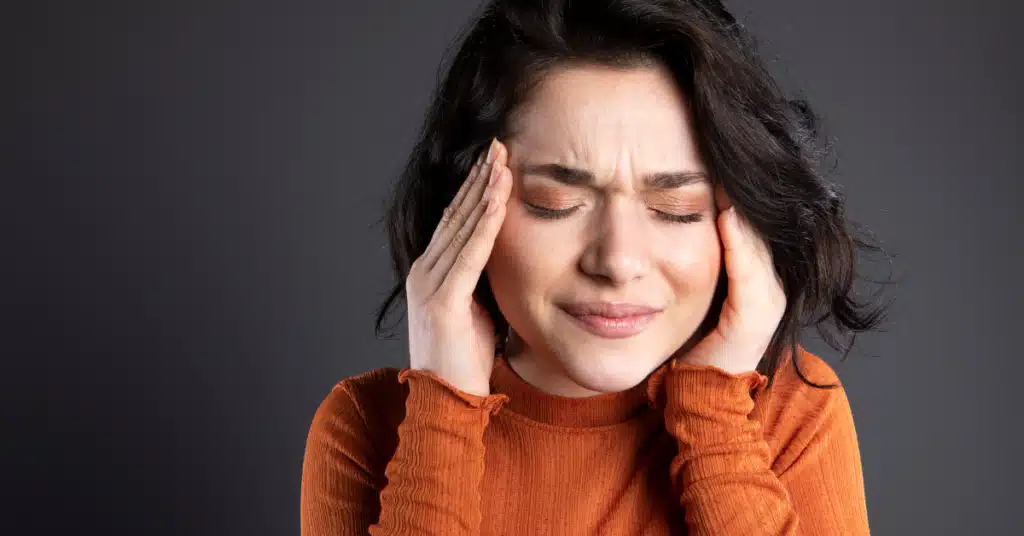
Headaches are a common symptom during or before the period. They occur because of the contraction and expansion of the blood vessels in the head due to a decrease in Estrogen.
However, women or AFABs do not experience headaches during their pregnancy.
Bloating
Bloating is again a very common symptom during PMS and periods. It occurs because of a drop in Estrogen and Progesterone levels, causing you to retain more water than usual, leading to PMS bloating. This can be managed by eating right.
Bloating is not common during pregnancy.
Many women during pregnancy sometimes experience changes in sex drive, which does not happen during periods.
Period Symptoms v/s Pregnancy Symptoms: At a Glance
| Symptom | Period | Pregnancy |
|---|---|---|
| Cramping | Intense cramps in the abdomen | Mild pulling sensations or twinges |
| Bleeding | Heavy flow lasting 3-7 days | Spotting for a shorter duration |
| Breast Changes | Tenderness or soreness that eases with period | Becomes more pronounced with time |
| Fatigue | Temporary | Persistent |
| Mood Swings | Sudden and temporary | Persistent |
| Nausea | Mild and not frequent | Morning Sickness |
| Cravings | Less common | Strong cravings and aversions |
| Headaches | Common | Less common |
| Bloating | Common | Less common |

Frequently Asked Questions
What are Ectopic Pregnancy symptoms?
Ectopic pregnancy occurs when the fertilized egg gets implanted outside the uterus, usually in the fallopian tubes. The symptoms are usually similar to a normal pregnancy but also include heavy bleeding, sharp pain in the abdomen on one side, and pain in the shoulder or chest.
Is heavy bleeding common during pregnancy?
No, heavy bleeding is not common during pregnancy. Light spotting is generally okay during pregnancy. Heavy bleeding can be a sign of miscarriage or other complications.
What are the symptoms of a hidden pregnancy?
In certain rare conditions, a woman can become pregnant but is not aware of it due to a lack of pregnancy symptoms. The symptoms of hidden pregnancy are irregular periods, fatigue, and nausea.
What can be the maximum delay in periods if you are not pregnant?
The length of the menstrual cycle varies from woman to woman. A delay of 1-2 weeks is considered normal. However, missing your period once is normal and does not necessarily indicate pregnancy.
Can you get pregnant right before your period?
Although a rare situation, it is possible to get pregnant right before your period. This happens when you have a very short luteal phase or if you ovulate later than expected.
Cheap Medicine Shop only refers to credible, authoritative sources for our content. If you're curious about how we ensure the integrity of our content, we encourage you to read our Content Information Policy.
Cheap Medicine Shop only refers to credible, authoritative sources for our content. If you’re curious about how we ensure the integrity of our content, we encourage you to read our Content Information Policy.