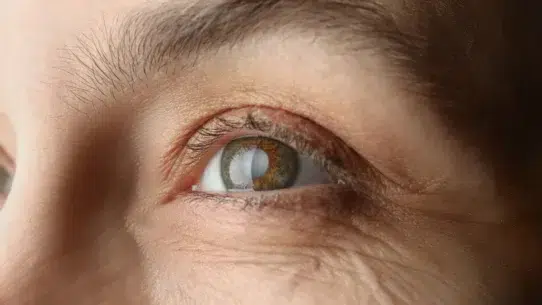








Cortical Cataracts are a common type of Cataract that can significantly affect a person’s vision.
This Cataract develops around one’s lens and starts at the edge of the lens.
There are several types of Cortical Cataracts, which can produce symptoms like blurry vision, sensitivity to glare, and decreased contrast sensitivity.
This Cataract might develop due to high water content and protein clumping in the lens.
People often look for the treatment of the condition since it can cause blindness if not treated properly.
This article will discuss the types, symptoms, causes, and treatment of Cortical Cataract.
Stages of Cortical Cataract
The development of a Cortical Cataract can happen in several stages for different individuals, with their own characteristics.
The types of Cortical Cataract includes Posterior Cortical Cataract, Anterior Cortical Cataract, Cortical Spoke Cataract, and Cortical Senile Cataract.
Posterior Cortical Cataract develops when the opacity develops right under the lens.
It can affect both near and distant vision, causing problems in reading and recognizing faces.
In contrast, Anterior Cortical Cataract forms in the front of the lens and can happen due to a head and eye injury.
Some individuals may experience Cortical Spoke Cataract, which is wedge-shaped in the lens.
It develops around the edges of the lens and makes its way to the center, forming streaks or spokes.
Among all the types of Cortical Cataracts, Cortical Senile Cataract is the most common one.
It is associated with the natural aging process and develops slowly over time, affecting both eyes of an individual.
Save up to 90% on your medicine bills
Careprost (With Brush) 3ml 0.03%
Starting at just $17.36 per bottleBuy Now
Bimat 0.03% w/v
Starting at just $10.16 per bottleBuy Now
Bimat (With Brush) 3 ml (0.03%)
Travatan 40 Mcg/2.5ml
Symptoms of Cortical Cataracts

The American Academy of Ophthalmology (AAO) states that sensitivity to glare is the most common symptom of Cortical Cataracts.
People with sensitivity to glare may find it difficult to tolerate bright lights like the headlights during night driving or in sunlight.
They may also observe symptoms like decreasing near and distant vision, making everyday tasks harder.
Another Cortical Cataract symptom is decreased contrast sensitivity, which can reduce the quality of one’s vision.
They may experience blurry or hazy vision and notice changes in their color perception.
Causes and Risk Factors Cortical Cataracts
Moderate Cortical Cataracts are often associated with increased age, weight change, and high levels of sunlight or UV rays exposure.
According to most studies, Cataracts are more common among people over 60 years of age.
Another research shows that farsighted people are more likely to develop Cortical Cataracts.
Individuals may experience a Cortical Cataract when the protein in their lens (water-soluble) comes in contact with water.
The solubility of these proteins causes opacity, leading to Cortical Cataract in individuals.
People with a family history of Cataracts and conditions like Diabetes are more likely to experience this condition.
Individuals who are prone to smoking and alcohol consumption may also experience Cortical Cataracts.
Treatment of Cortical Cataracts

In the early stages of Cortical Cataracts, regular eye checkups and changes in glasses or contact lenses can help improve vision.
However, this may only be a temporary solution since Cortical Cataracts grow over time.
If it remains untreated, Cortical Cataracts can ultimately lead to blindness in an individual.
Hence, for advanced or later stages of Cortical Cataracts, doctors suggest Cataract surgery.
Extracapsular Cataract Extraction is the most commonly used method, which is also affordable.
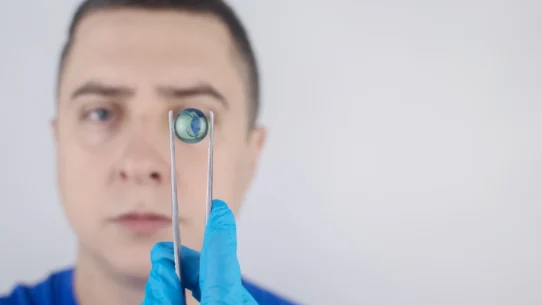
In the surgery, the lens is removed and replaced with an artificial lens, improving the vision of the affected person.
Conclusion
Cortical is quite common and develops in the peripheral area of a person’s lens.
Individuals with Cortical Cataracts may experience sensitivity to glare, hazy vision, decreased contrast sensitivity and decreased near and distant vision.
People are more likely to experience this condition due to age, genetics, exposure to radiation, and underlying Diabetes.
Some people may also experience Cortical Cataracts due to smoking and drinking alcohol.
Although changing glasses may help in the earlier stages, doctors may often suggest Cataract surgery.
Since Cortical Cataracts can lead to blindness, it is best to consult your doctor on experiencing any of its symptoms.

Frequently Asked Questions
How common is Cortical Cataract?
Cortical Cataracts is one of the most common types of Cataracts and is usually present in the elderly population. It is usually one of the most common age-related Cataracts and is present in many individuals over the age of 65.
Are Cortical Cataracts hard to remove?
No, Cortical Cataracts are not generally hard to remove. However, the process of removing it can be quite delicate. The procedure has high success rates and can improve one’s vision effectively.
How fast do Cortical Cataracts grow?
The growth of Cortical Cataracts may vary for every individual. In some cases, it may develop gradually over the years, while for others, it can progress quite rapidly.
Can Cortical Cataracts lead to blindness if left untreated?
Yes, Cortical Cataracts can lead to blindness if left untreated. In the initial stages, affected people might face difficulty in reading or driving, but with time, the condition gets worse and impairs one’s vision.
Are there any home remedies for treating Cortical Cataracts?
No, there are no home remedies for treating Cortical Cataracts. Individuals can maintain a healthy lifestyle and cut back on smoking and drinking to reduce the risk of Cortical Cataracts but cannot treat the condition.
Cheap Medicine Shop only refers to credible, authoritative sources for our content. If you're curious about how we ensure the integrity of our content, we encourage you to read our Content Information Policy.