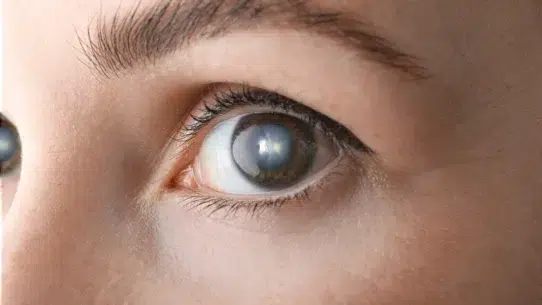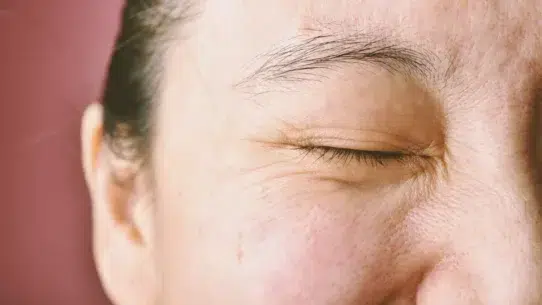






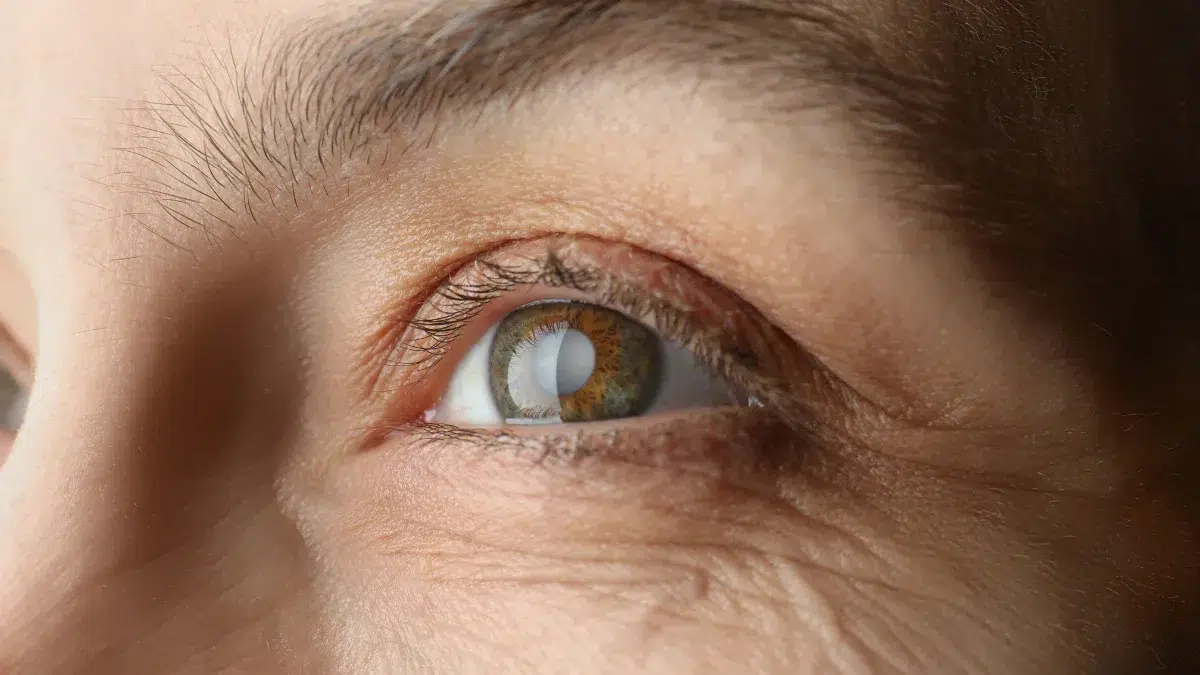

The eye’s lens, a delicate structure responsible for focusing light onto the retina, can change over time, leading to a condition known as Nuclear Cataract.
This age-related phenomenon involves clouding the lens nucleus, the central part of the lens.
As this cloudiness progresses, it can significantly impact vision, making daily activities challenging.
This article will explore the symptoms and causes of Nuclear Cataracts and provide a better understanding of how to manage and treat Nuclear Cataracts.
Nuclear Cataract Causes
The primary cause of Nuclear Cataracts is natural aging.
Over time, the proteins within the eye lens break up and clump together, forming cloudy areas in the lens nucleus.
This clouding obstructs the passage of light, leading to visual disturbance.
While age is a significant factor, other contributing factors may accelerate the development of Nuclear Cataracts.
Other contributing factors may include genetics, UV radiation, Diabetes, and smoking.
Let’s discuss these other factors in detail.
Genetics: Genetic predisposition can affect the likelihood of developing Nuclear Cataracts.
Individuals may be more susceptible to this condition if there is a family history of Cataracts.
UV radiation: Excessive exposure to Ultraviolet (UV) radiation, often from prolonged sun exposure, can contribute to the development of Cataracts.
Wearing sunglasses with UV protection may help reduce the risk of Cataracts.
Diabetes: Individuals experiencing Diabetes are at an increased risk of developing Nuclear Cataracts.
The fluctuations in blood sugar levels associated with Diabetes can impact the health of the lens.
Smoking: Smoking has been identified as a modifiable risk factor for Nuclear Cataracts.
The harmful substances in tobacco can accelerate the degeneration of the lens proteins.
Save up to 90% on your medicine bills
Careprost (With Brush) 3ml 0.03%
Starting at just $17.36 per bottleBuy Now
Bimat 0.03% w/v
Starting at just $10.16 per bottleBuy Now
Bimat (With Brush) 3 ml (0.03%)
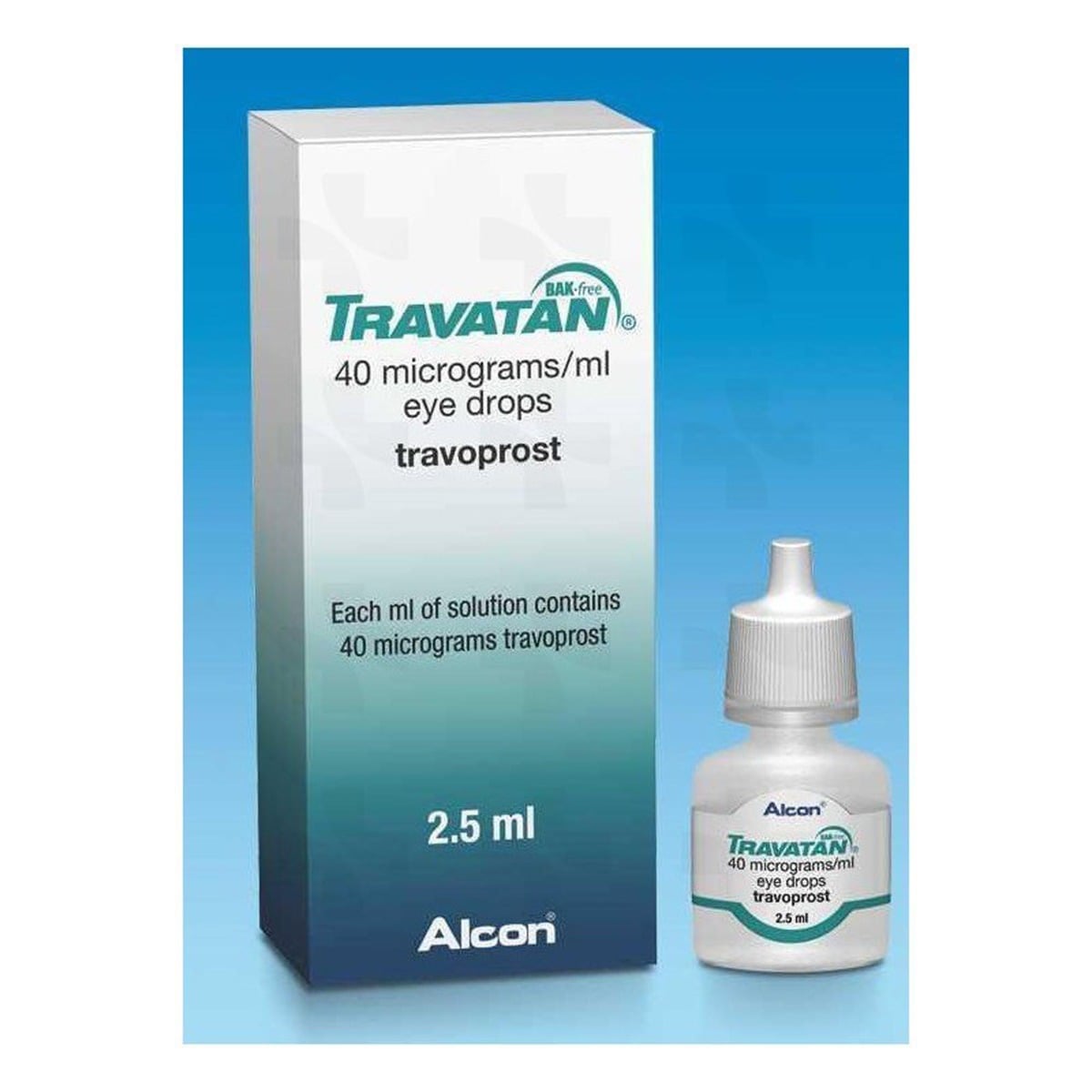
Travatan 40 Mcg/2.5ml
Nuclear Cataract Symptoms

The progression of Nuclear Cataracts is gradual, and symptoms may not be immediately noticeable.
As the condition advances, individuals may experience symptoms such as blurred vision, color fading, difficulty seeing in low light, photophobia, and frequent changes in eyeglass prescription.
Blurred vision: Clouding the lens nucleus results in blurred vision, particularly at a distance. This can make activities like driving or reading road signs challenging.
Color fading: Nuclear Cataracts can lead to a gradual fading of colors. Colors may appear less vivid or vibrant than they once did.
Increased sensitivity to light: Individuals with Nuclear Cataracts may become more sensitive to bright lights (photophobia). Glare from headlights or sunlight can be particularly bothersome.
Difficulty seeing in low light: Vision in low-light conditions may be compromised as Nuclear Cataracts progress. Activities such as driving at night may become more challenging.
Frequent changes in eyeglass prescription: Due to the changes in the lens, individuals with Nuclear Cataracts may find that their eyeglass prescription needs frequent adjustments to maintain optimal vision.
Nuclear Cataracts Treatment Options

Individuals with Nuclear Cataracts often experience a gradual decline in their near vision, making activities like reading and threading a needle more difficult.
While no proven method exists to prevent Nuclear Cataracts, several Cataract treatment options can help manage the condition and improve visual function.
Prescription glasses: In the early stages of Nuclear Cataracts, prescription glasses may be sufficient to correct vision and alleviate Cataract symptoms.
An eye care professional can determine the appropriate prescription based on the individual’s visual needs.
Surgery: When Nuclear Cataracts significantly impair vision and affect daily activities, surgical intervention may be recommended.
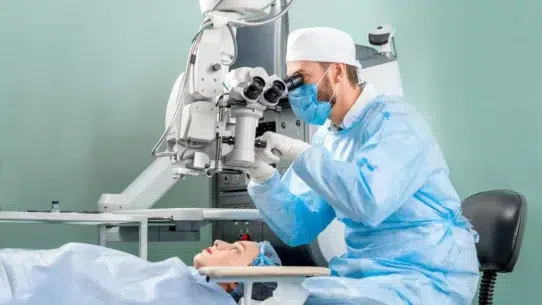
Cataract surgery involves removing and swapping the clouded lens with an artificial lens. This procedure is highly successful, with a low risk of complications.
Intraocular lens: Various types of intraocular lenses are available for Cataract surgery, each offering unique advantages.
Monofocal lenses provide clear vision at either far or near distances. On the other hand, multifocal lenses allow clear vision at multiple distances, reducing the need for reading glasses.
Conclusion
Nuclear Cataracts are a common consequence of aging, impacting the clarity of vision for many individuals.
While the development of Cataracts is a natural part of the aging process, understanding the contributing factors and identifying the symptoms is essential for timely intervention.
Whether through the use of prescription glasses, surgical procedures, or preventive measures, individuals can take steps to manage Nuclear Cataracts and maintain optimal eye health.
Regular eye examinations and consultation with eye care professionals are crucial in effectively identifying and treating symptoms of Nuclear Cataracts and other types of Cataracts.

Frequently Asked Questions
Is Cataract surgery safe?
Yes, Cataract surgery is a highly safe and common procedure. Advanced technology has made it minimally invasive, and most patients experience significant improvement in vision after surgery. Complications are rare, and the benefits often outweigh the risks. Do not hesitate to consult a doctor for best advice.
See our Recommendations
What is the recovery process after Cataract surgery?
Recovery from Cataract surgery is generally swift, with most individuals experiencing improved vision within a few days. Patients are advised to follow post-operative care instructions to ensure a smooth recovery.
See our Recommendations
Can Cataracts come back after surgery?
No, once a Cataract is removed, it does not grow back. However, in some cases, a secondary membrane may thicken over time, causing similar vision issues. Regular appointments with an eye doctor are essential for ongoing eye health.
See our Recommendations
At what age do Nuclear Cataracts typically develop?
Nuclear Cataracts are often associated with aging and their prevalence increases after age sixty. However, they can develop earlier, especially in individuals with certain risk factors such as genetics and daily habits.
See our Recommendations
Can a healthy lifestyle help prevent Nuclear Cataracts?
Yes, adopting a healthy lifestyle can help prevent Nuclear Cataract. A healthy lifestyle includes a healthy diet, less alcohol consumption, and avoiding smoking.
See our Recommendations
Cheap Medicine Shop only refers to credible, authoritative sources for our content. If you're curious about how we ensure the integrity of our content, we encourage you to read our Content Information Policy.