





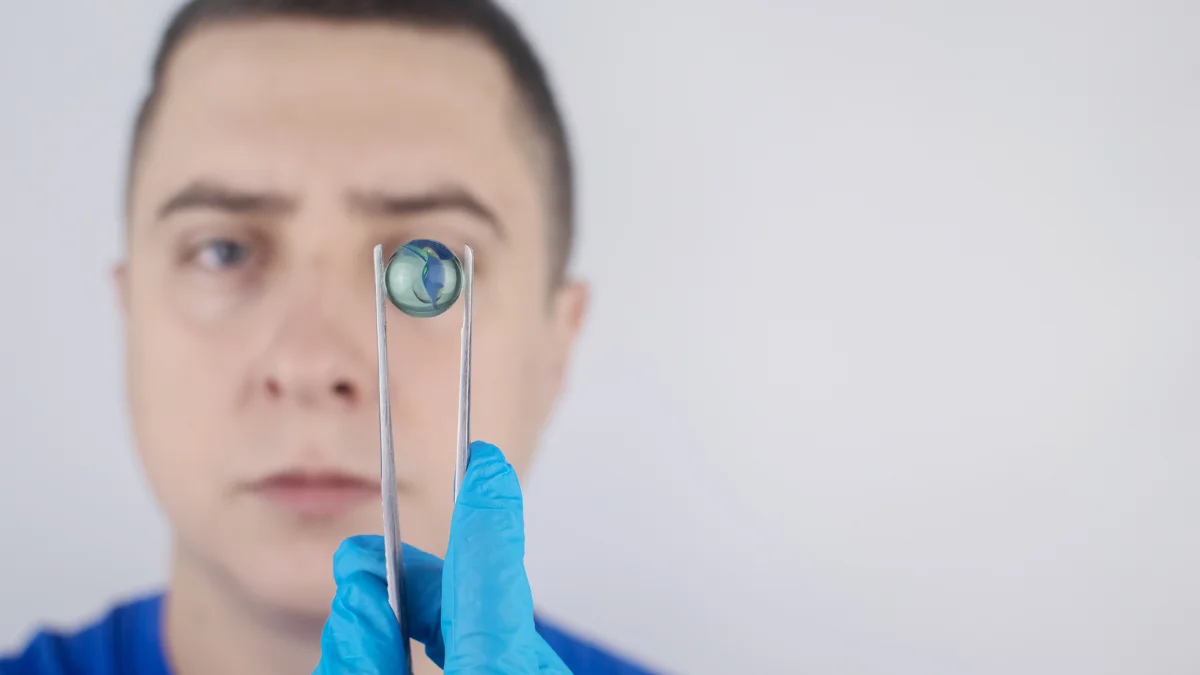

Cerulean Cataract is a rare condition that creates a distinctive blue tint on the lens of one’s eye.
Since this condition creates blue and white opacities, Cerulean Cataracts are also known as the blue dot Cataracts.
This form of Cataract affects the nucleus and cortex of the lens, and it usually does not show any symptoms until late.
Since this eye condition can lead to vision loss, it is important to learn about the causes and treatments of this Cataract.
This article will discuss the symptoms, causes, and treatments of Cerulean Cataracts in detail.
Symptoms of Cerulean Cataracts

According to research, the symptoms of Cerulean Cataracts may start appearing as a child.
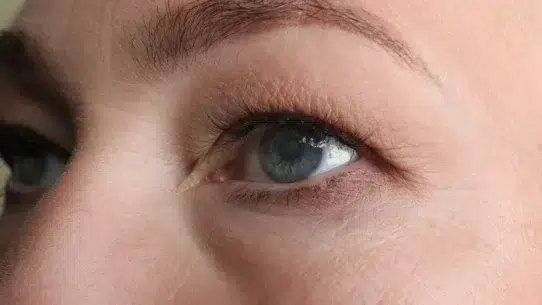
One of the most noticeable symptoms of Cerulean Cataracts is the blue tint in one’s eyes.
The tint results in a decrease in the visual acuity of a person, which can cause disturbance to their vision.
In most cases, people may experience the symptoms of sensitivity to contrast and glare.
These people might sometimes experience sensitivity to bright lights and difficulty while driving at night.
The blue tint might also make it challenging to differentiate between different colors since it may distort colors.
If the symptoms remain untreated, it can worsen with time, threatening one’s vision.
Save up to 90% on your medicine bills
Careprost (With Brush) 3ml 0.03%
Starting at just $17.36 per bottleBuy Now
Bimat 0.03% w/v
Starting at just $10.16 per bottleBuy Now
Bimat (With Brush) 3 ml (0.03%)
Travatan 40 Mcg/2.5ml
Understanding the Blue Tint
When a person has a Cerulean Cataract, it is usually diagnosed with the slit lamp examination, which shows the blue opacity or tint on one’s lens.
The blue tint appears due to the scattering of light in one’s lens, leading to this discoloration.
Alongside the blue tint, individuals may also experience opacity in the form of dotted white opacities.
This blue tint plays a significant role in identifying a healthy lens from the affected one in this type of Cataract.
It is important to learn about the causes of this blue tint in order for a person to receive the best treatment for the condition.
Cerulean Cataract Causes and Risk Factors
Since Cerulean Cataract is a rare form of Congenital Cataract, its causes and risk factors are quite similar.
A study states that it is a genetically inherited condition and often happens due to a mutation in certain genes.
This makes it important to identify the genetic mutations properly in order to select the best treatment for the condition.
Another research states that exposure to radiation can result in the development of Cataracts.
Under most circumstances, the UV rays prove to be the most harmful factor for this condition.
In some cases, smoking and medical conditions like Diabetes can also become some of the major risk factors for Cerulean Cataract.
Cerulean Cataract Treatment

Like any other form of Cataracts, Cerulean Cataracts can also be treated effectively based on their severity.
In the early stage of Cerulean blue dot Cataract, doctors may suggest eyeglasses or contact lenses to improve one’s vision.
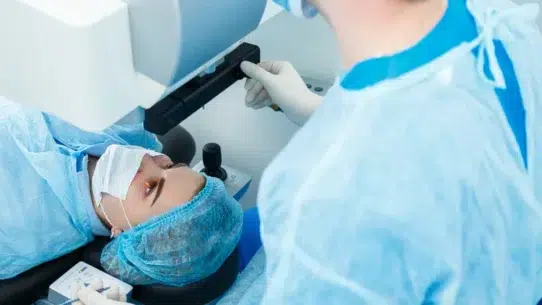
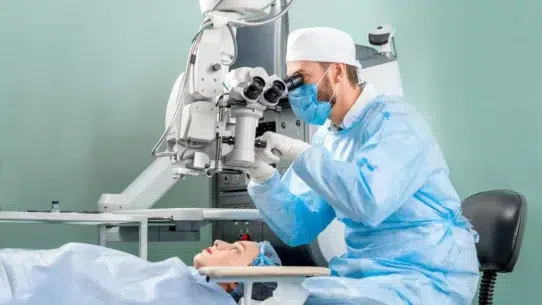
However, when the opacity gets worse, doctors may suggest undergoing Cataract surgery.
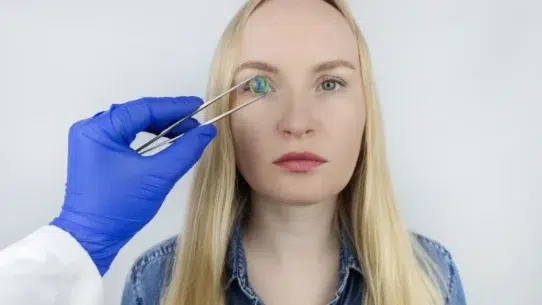
The surgery helps in removing the affected lens and replacing it with an artificial one.
The artificial intraocular lens works in the place of the actual affected lens and can protect one’s sight effectively.
Conclusion
The Cerulean Cataract, also known as the Cerulean Blue Dot Cataract, is a form of developmental Cataract.
Cerulean Cataract shows symptoms like sensitivity to glare, contrast sensitivity, and decreasing vision.
Although genetics are one of the biggest causes of this condition, people may also experience it due to UV radiation, Diabetes, and smoking.
At the initial stages, doctors might suggest changing eyeglasses or contact lenses.
However, in the later stages, an individual might need to opt for Cataract surgery to prevent complete vision loss.
It is always best to consult a doctor if you are experiencing the symptoms of Cerulean Cataract.

Frequently Asked Questions
How common is Cerulean Cataract as compared to other Cataracts?
Cerulean Cataract is very rare as compared to the other types of Cataracts. Age-related Cataracts are the most common one, while Cerulean Cataract usually starts from the moment a child is born in rare circumstances.
Does Cerulean Cataract change color perception?
Yes, Cerulean Cataracts can change color perception. When a person experiences this condition, the blue tint in their lens can distort the colors and make it difficult for the affected persons to differentiate among any colors.
Can Cerulean Cataract be diagnosed in children?
Yes, Cerulean Cataracts can be diagnosed in children. It is hereditary in nature, and its symptoms can be present since early childhood. Doctors can identify the blue tint and other symptoms during pediatric eye examinations, making an early diagnosis of the condition.
Can you have Cerulean Cataracts in both eyes?
Yes, you can have Cerulean Cataracts in both eyes. In many cases, this genetic condition leads to bilateral Cataracts, in which both eyes of a person can be affected by the blue tint on the lenses.
How does the blue tint during Cerulean Cataract affect one’s vision?
The blue tint in Cerulean Cataract can significantly affect one’s vision. It reduces their visual acuity, changes color perception, and increases sensitivity to glare. This tint makes it challenging to differentiate details and also results in contrast sensitivity, affecting one’s vision.
Cheap Medicine Shop only refers to credible, authoritative sources for our content. If you're curious about how we ensure the integrity of our content, we encourage you to read our Content Information Policy.